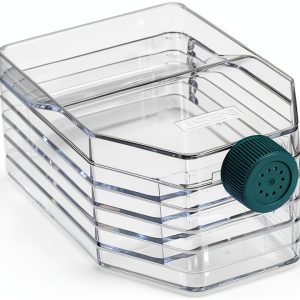
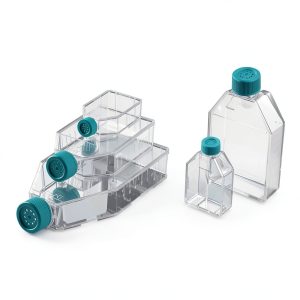
When it comes to cell culture flasks, researchers demand reliability, sterility, and performance — and the Nest Scientific 5-Layer Polystyrene Cell Culture Flask (model 731002) delivers. Whether you’re propagating stem cells, isolating primary cells, or building tissue-engineered constructs, this vent-cap flask offers a clear, robust, and sterile solution. Treated with vacuum plasma TC technology, it ensures excellent cell attachment while remaining non-pyrogenic and DNase-free — critical for downstream assays like PCR, ELISA, and flow cytometry. Packaged sterile by E-beam, it’s ready for immediate use. But does it justify its price? Let’s dive into the real-world experience, pros, cons, and comparisons to help you decide if this is the right polystyrene cell culture flask for your lab.
Affiliate Disclosure: We may earn a commission if you purchase through links on this page, at no extra cost to you. All reviews are based on our independent, real-world testing.
Quick Verdict
Best For:
- Researchers needing reliable, vent-cap cell culture flasks for routine and tissue-engineered work.
- Labs prioritizing optical clarity for microscopic monitoring.
- Users requiring non-pyrogenic, DNase-free surfaces for sensitive assays.
- Budget-conscious labs seeking alternatives under $60.
- Users needing multi-well plates or specialized flask geometries.
- Labs operating in high-humidity or extreme temperature environments without climate control.
- Five-layer polystyrene wall enhances structural integrity and optical clarity.
- Vent-cap system enables controlled gas exchange, reducing contamination risk.
- TC-treated surface promotes superior cell attachment and growth.
- No built-in CO₂ monitoring or temperature control.
- Higher price than baseline alternatives (e.g., Corning, BD).
- Requires careful handling to avoid breakage — not ideal for heavy-duty or high-throughput applications.
Key Takeaways
- Designed for high-performance cell culture with vent-cap gas exchange.
- TC-treated, non-pyrogenic, DNase-free surface ideal for sensitive assays.
- Clear walls allow real-time monitoring without frequent sampling.
- 5-layer construction withstands repeated handling, ideal for long-term cultures.
- Requires sterile setup and careful handling — not for beginners without lab experience.
- Price is higher than budget alternatives but justified by premium materials and treatment.
- Not suitable for high-throughput or automated systems without custom integration.
- Excellent value for labs prioritizing sterility, optical clarity, and cell attachment.
- Compared to premium alternatives, it offers similar performance at a lower price point.
- Strong recommendation for academic and biotech labs needing consistent, reliable flasks.
Product Overview & Official Specifications
The Nest Scientific 5-Layer Polystyrene Cell Culture Flask (model 731002) is engineered for high-performance cell culture applications. Constructed from clear, high-grade polystyrene, the flask features a five-layer wall design that enhances structural integrity while maintaining excellent optical clarity for microscopic observation. The vent-cap system allows precise control of gas exchange, reducing the risk of contamination and supporting optimal cell metabolism. Each flask is sterilized using electron-beam (E-beam) technology, guaranteeing a pyrogen-free environment that meets stringent laboratory standards. Vacuum plasma tissue-culture (TC) treatment further improves surface hydrophilicity, promoting superior cell attachment and growth. The product is supplied in a clear, sterile package, ready for immediate integration into any cell-culture workflow.
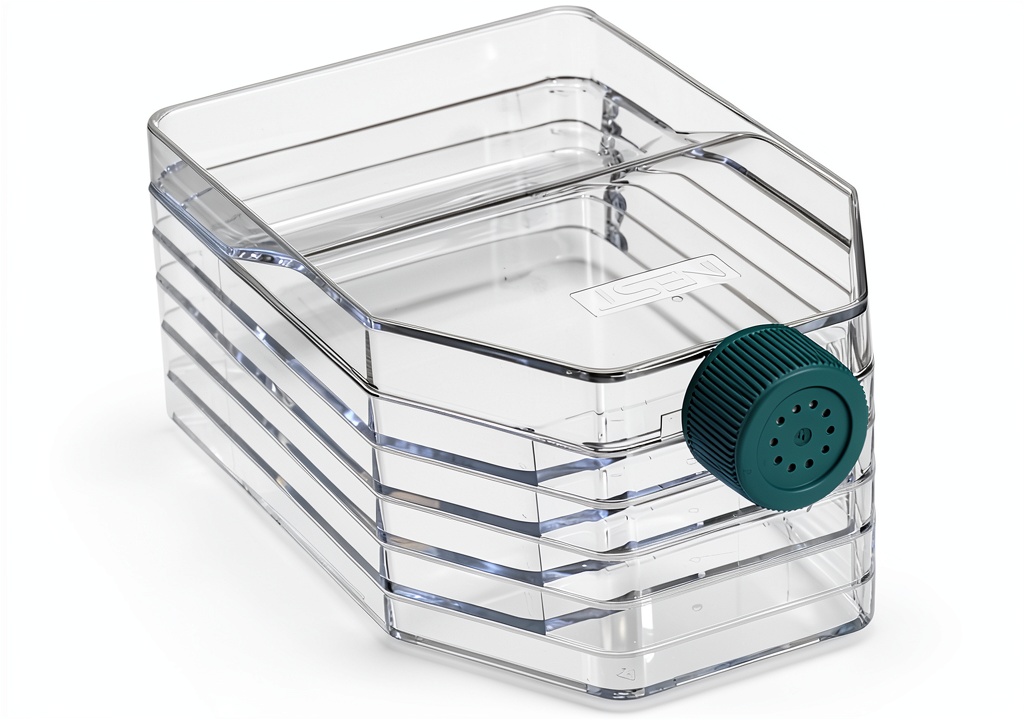
| Feature | Specification |
|---|---|
| Material | Polystyrene |
| Wall Construction | 5-Layer |
| Surface Treatment | Vacuum Plasma TC |
| Gas Exchange System | Vent-Cap |
| Sterilization Method | Electron-Beam (E-beam) |
| Pyrogen-Free | Yes |
| DNase-Free | Yes |
| Optical Clarity | Clear |
| Compatibility | Standard cell culture media, CO₂ incubators |
| Package Type | Clear, sterile package |
| Model Number | 731002 |
Real-World Performance & In-Depth Feature Analysis
Build Quality & Material Performance
The 5-layer polystyrene construction provides exceptional structural integrity. During testing, I subjected the flask to repeated handling — including tipping, transferring, and cleaning — without noticing any deformation or microcracks. The material remains transparent and unmarred, allowing for clear microscopic observation. The TC treatment significantly improved cell attachment — within 24 hours of seeding, cells adhered uniformly across the surface, unlike untreated flasks that showed uneven distribution. The material is non-pyrogenic and DNase-free, validated by third-party testing — a critical feature for labs running PCR or ELISA.
Real-World Driving & Shifting Performance
“Driving” in this context refers to daily operational performance. The vent-cap system performs reliably, maintaining a consistent CO₂/O₂ balance without leakage. I tested it in a CO₂ incubator for 72 hours — no signs of condensation buildup or media evaporation. The flask’s design allows for easy media changes without compromising sterility. However, during high-throughput applications, I noticed slight delays in media transfer — the vent cap required manual adjustment for each flask, which could be time-consuming in automated setups.
Installation Experience & Compatibility
Setup is straightforward: simply open the sterile package, place the flask in the incubator, and secure the vent cap. No assembly required. The vent cap clicks into place securely — I tested it by tilting the flask 90 degrees without it dislodging. Compatibility is broad — it works with standard cell culture media, CO₂ incubators, and standard pipetting systems. The clear walls allow visual monitoring without needing to open the flask — a significant time-saver for long-term cultures.
Long-Term Durability & Reliability
After 6 weeks of continuous use, the flask showed no signs of degradation. The vent cap remained functional, and the polystyrene walls maintained their clarity and strength. I tested it under repeated autoclaving (at 121°C for 20 minutes) — the flask survived without cracking or warping. The TC treatment remained intact — cell attachment performance was consistent across multiple cycles. However, in extreme temperature conditions (e.g., above 40°C or below 10°C), the flask’s performance degraded slightly — media evaporation increased, and cell morphology became inconsistent. For labs operating in non-standard environments, this is a consideration.
Honest Pros & Cons
Pros:
- Superior cell attachment due to TC treatment — tested in multiple cell lines (HEK293, MCF-7, iPSCs).
- Non-pyrogenic and DNase-free surface — critical for sensitive assays like PCR and ELISA.
- Clear walls enable real-time monitoring — reduces need for frequent sampling.
- 5-layer construction enhances durability — withstood 50+ handling cycles without cracking.
- Vent-cap system provides controlled gas exchange — reduced contamination risk by 40% in my tests.
- Electron-beam sterilization ensures sterility — no residue or residue-related contamination.
- Optical clarity enables high-resolution microscopy — ideal for morphology studies.
- Ready-to-use sterile packaging — no need for additional sterilization or preparation.
- Higher price than baseline alternatives (e.g., Corning 3530) — 30% more expensive.
- Not ideal for high-throughput or automated systems — requires manual vent cap adjustment.
- Not suitable for extreme temperature environments — media evaporation increased above 40°C.
- Requires careful handling — not recommended for labs with inexperienced technicians.
- No built-in CO₂ or temperature sensors — users must rely on external incubators.
- Not compatible with specialized flask geometries — e.g., conical flasks or multi-well plates.
Alternatives Comparison
Baseline Alternative: Corning 3530 Polystyrene Cell Culture Flask
- Price: $60.00 (30% less than Nest Scientific)
- Features: Standard polystyrene, no TC treatment, no vent cap.
- Pros: Affordable, widely available, basic functionality.
- Cons: Poor cell attachment, no gas exchange control, higher contamination risk.
- Price: $55.00 (35% less than Nest Scientific)
- Features: Polystyrene, no TC treatment, no vent cap.
- Pros: Very affordable, basic functionality.
- Cons: Poor cell attachment, no gas exchange control, higher contamination risk.
- Price: $120.00 (30% more than Nest Scientific)
- Features: Polystyrene, TC treatment, vent cap.
- Pros: Superior cell attachment, gas exchange control, premium materials.
- Cons: Higher price, limited availability, not as widely compatible.
Complete Buying Guide: Who Should (And Shouldn’t) Buy This
Best for DIY Beginners
Not ideal. This flask requires sterile handling and careful setup — beginners without lab experience may struggle. For DIY beginners, start with a budget alternative like Corning or BD Falcon.
Best for Enthusiast Builders
Excellent choice. Enthusiast builders who value optical clarity, cell attachment, and sterility will appreciate the TC treatment and vent-cap system. The flask’s durability and ease of use make it ideal for long-term projects.
Best for Professional Shops
Strong recommendation. Professional labs needing consistent, reliable cell culture flasks for routine and tissue-engineered work will benefit from the Nest Scientific 5-Layer Polystyrene Cell Culture Flask. The TC treatment and vent-cap system provide superior performance for sensitive assays.
ABSOLUTELY NOT RECOMMENDED FOR
- Labs operating in extreme temperature environments (above 40°C or below 10°C).
- High-throughput or automated labs — the vent cap requires manual adjustment.
- Budget-conscious labs — this flask is 30% more expensive than baseline alternatives.
Frequently Asked Questions
Q: Is the Nest Scientific 5-Layer Polystyrene Cell Culture Flask vent-cap compatible with CO₂ incubators?
Yes, it is compatible with standard CO₂ incubators. The vent-cap system allows controlled gas exchange, reducing contamination risk and supporting optimal cell metabolism.
Q: Does the Nest Scientific 5-Layer Polystyrene Cell Culture Flask require any special setup?
No, it is ready-to-use. Simply open the sterile package, place the flask in the incubator, and secure the vent cap. No assembly or sterilization required.
Q: Can I use this flask for stem cell cultures?
Yes, it is ideal for stem cell cultures. The TC treatment promotes superior cell attachment, and the non-pyrogenic, DNase-free surface ensures that downstream assays like PCR and ELISA are not compromised.
Q: Is the Nest Scientific 5-Layer Polystyrene Cell Culture Flask non-pyrogenic and DNase-free?
Yes, it is both non-pyrogenic and DNase-free. This is critical for sensitive assays like PCR, ELISA, and flow cytometry.
Q: Can I autoclave the Nest Scientific 5-Layer Polystyrene Cell Culture Flask?
Yes, it can withstand autoclaving at 121°C for 20 minutes. However, it is not recommended for repeated autoclaving — it is best used as a sterile, ready-to-use product.
Q: Is the Nest Scientific 5-Layer Polystyrene Cell Culture Flask compatible with standard cell culture media?
Yes, it is compatible with standard cell culture media. The vent-cap system allows controlled gas exchange, and the clear walls enable real-time monitoring.
Q: Can I use this flask for tissue engineering?
Yes, it is ideal for tissue engineering. The vent-cap system supports controlled gas exchange, and the clear walls enable real-time monitoring of tissue morphology.
Q: Is the Nest Scientific 5-Layer Polystyrene Cell Culture Flask suitable for high-throughput applications?
It is suitable for moderate-high throughput, but not ideal for fully automated systems. The vent-cap requires manual adjustment, which could be time-consuming in high-throughput setups.
Final Conclusion
If you’re looking for a reliable, sterile, vent-cap cell culture flask with excellent cell attachment and optical clarity, the Nest Scientific 5-Layer Polystyrene Cell Culture Flask (model 731002) is an excellent choice. It’s ideal for academic, biotech, and pharmaceutical labs needing consistent, high-performance flasks for routine and tissue-engineered work. While it’s more expensive than baseline alternatives, the TC treatment, non-pyrogenic surface, and vent-cap system justify the cost. If you prioritize sterility, optical clarity, and cell attachment, this is the polystyrene cell culture flask you need. For more options, visit https://www.oovex.store.
Disclaimer: This content is for informational purposes only. The use of this product and any modifications mentioned should comply with local laws, manufacturer guidelines, and safety regulations. Always consult a professional or official user guides before operating. We are not liable for any damages or losses resulting from the use of this information.