




Description
Product Overview
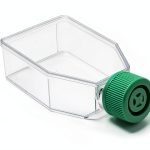
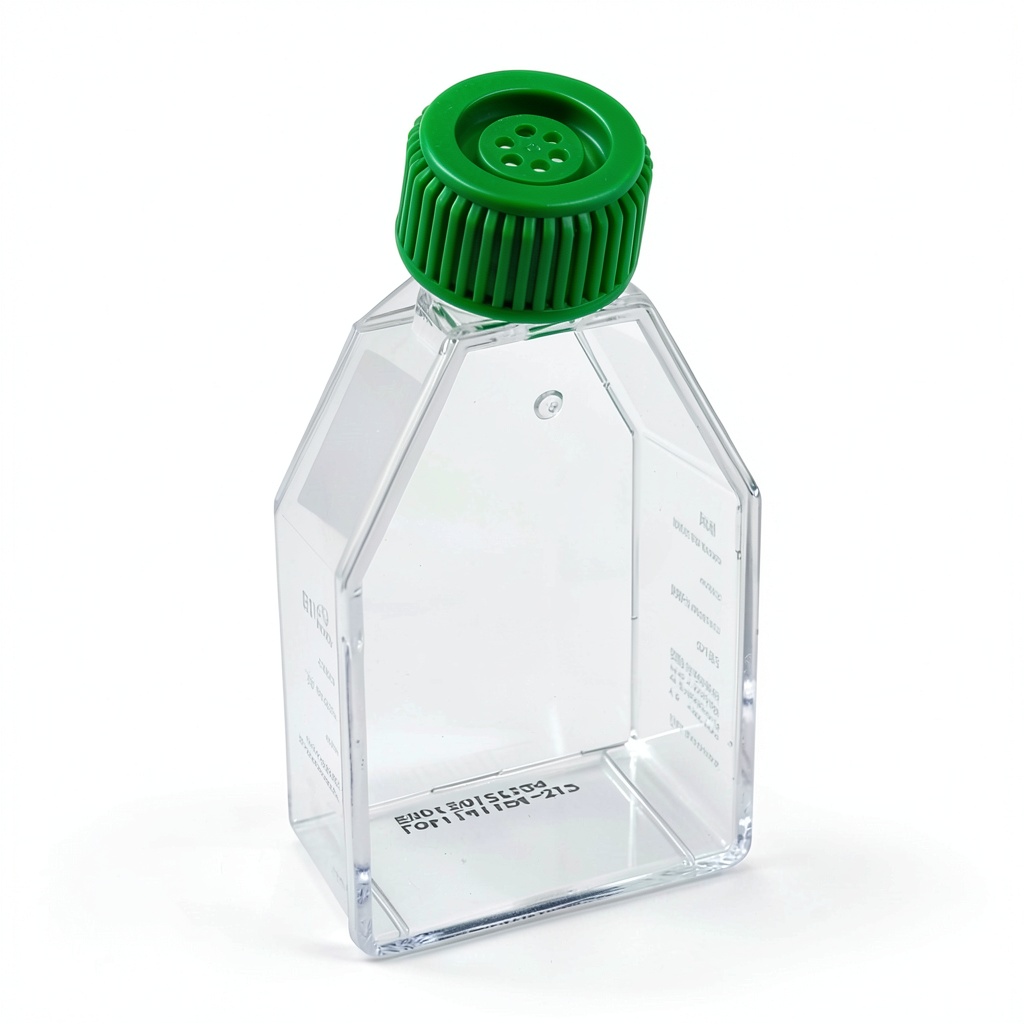
The Celltreat 229510 suspension culture flask is engineered for laboratory researchers who require a reliable vessel for growing suspension cell lines. Constructed from high‑quality borosilicate glass, the flask offers excellent chemical resistance and thermal stability, allowing it to withstand repeated autoclave cycles and a wide range of experimental conditions. Each flask holds 50 mL of culture medium, a volume that balances sufficient cell density with manageable handling for routine assays, sub‑culturing, and scale‑up studies.
One of the defining features of this product is the integrated 0.22 μm hydrophobic membrane vent cap. The vent cap permits efficient gas exchange—oxygen influx and carbon dioxide efflux—while preventing contamination from airborne microbes. The membrane’s hydrophobic nature also discourages liquid leakage, ensuring that the internal environment remains sterile throughout the culture period. The cap is designed to fit securely onto the flask’s standard neck, providing a leak‑proof seal that is compatible with common laboratory equipment such as orbital shakers and incubator racks.
All flasks are gamma‑irradiated and sealed in zip‑closure sterile bags, guaranteeing a contaminant‑free starting point for every experiment. The sterilization process does not alter the glass surface, preserving the flask’s optical clarity for easy visual monitoring of cell growth and morphology. Detailed product specifications—including dimensions, weight, and model number—are provided on the packaging label, enabling precise inventory management and compliance with laboratory standard operating procedures.
Usage
These suspension culture flasks are ideally suited for a variety of applications, ranging from basic cell line maintenance to advanced bioprocess development. Researchers working with mammalian, insect, or microbial suspension cultures will appreciate the flask’s ability to maintain a stable, sterile environment while allowing rapid diffusion of gases essential for cell metabolism. The 50 mL capacity is particularly advantageous for pilot‑scale experiments where medium volumes must be sufficient to support cell proliferation without excessive waste of reagents.
In practice, the flask can be placed on standard orbital shakers within a humidified incubator set to 37 °C (or the temperature appropriate for the cell type). The vent cap’s membrane ensures that the culture remains aerated without the need for additional gas‑exchange devices, simplifying workflow and reducing the risk of contamination. Because the flask is made of transparent glass, users can monitor cell density and morphology directly, eliminating the need for frequent sampling and preserving culture integrity.
Why Choose Us
Choosing the Celltreat 229510 flask means selecting a product that combines rigorous quality control with thoughtful design. Each batch undergoes strict testing for dimensional accuracy, membrane integrity, and sterility, ensuring that every flask meets the high standards required by demanding research environments. The use of gamma irradiation as a sterilization method provides a broad spectrum of microbial inactivation while preserving the physical properties of the glass and membrane, a balance that many competing products cannot achieve.
Beyond the technical specifications, Celltreat offers comprehensive customer support, including rapid response to inquiries, detailed product documentation, and assistance with troubleshooting experimental protocols. Our commitment to after‑sales service extends to providing guidance on optimal flask handling, storage conditions, and best practices for maximizing cell yield and viability. This level of support helps laboratories reduce downtime and maintain consistent experimental outcomes.
Key Features
- High‑quality borosilicate glass provides chemical resistance and thermal stability for diverse laboratory applications.
- Integrated 0.22 μm hydrophobic vent cap enables efficient gas exchange while maintaining a sterile barrier.
- Gamma‑irradiated and sealed in sterile zip‑closure bags to guarantee contaminant‑free starting conditions.
- Transparent design allows direct visual monitoring of cell growth without disturbing the culture.
- Dedicated Celltreat customer support ensures expert assistance and reliable after‑sales service.
FAQ
Can the vent cap be removed and replaced with a different type of closure?
Yes, the vent cap is designed to fit standard 25 mm neck flasks, allowing users to replace it with alternative closures such as screw caps or silicone seals if a specific experimental setup requires a different sealing method. However, removing the vent cap eliminates the built‑in gas‑exchange membrane, so users should ensure that an appropriate alternative ventilation strategy is employed.
Is the flask compatible with automated liquid handling systems?
The flask’s dimensions and standard neck size make it compatible with many automated platforms that handle glassware. When integrating with robotic systems, it is important to verify that the gripping mechanism can securely hold the flask without applying excessive force that could damage the glass or the vent cap membrane.
What is the recommended storage condition for the sterile flasks before use?
Store the flasks in a clean, dry environment at room temperature, preferably in a sealed cabinet or drawer to protect the sterile packaging. Avoid exposure to direct sunlight or extreme temperature fluctuations, as these conditions could compromise the integrity of the gamma‑irradiated sterility and the membrane’s performance.
How does the hydrophobic membrane prevent liquid leakage?
The membrane’s hydrophobic surface creates a barrier that repels aqueous solutions, allowing gases to pass while preventing liquid from passing through the vent. This property ensures that the culture medium remains contained within the flask even when the vent cap is subjected to pressure changes during shaking or incubation.
Can the flask be reused after thorough cleaning and sterilization?
While the flask is designed for single‑use applications to guarantee sterility, it can be cleaned with appropriate laboratory detergents and re‑sterilized by autoclaving if a laboratory chooses to reuse it. Reuse may affect the performance of the vent cap membrane, so it is advisable to inspect the membrane for any damage before re‑installation.
}




 BD 353112 Falcon Polystyrene Cell Culture Flask with Blue Vented Screw Cap, Straight Neck, 175 Sq cm Growth Area, 750mL Capacity (Case of 40)
Reviews
There are no reviews yet.